Transforming policy discussion experiences
Team
2 Product Designers
1 Developer
1 PM
1 PMM
Timeline
Skills
Product Strategy
UX and Behavioral Research
Game Design
I joined Point Taken as it transitioned from a psychology research study into a real product. I wore two hats simultaneously — product design and marketing intern and research assistant in the lab running the study — and reach role fed the other.
Polarization and disagreement is everywhere.
Cross-partisan dialogue is supposed to bridge political divides, but research shows that without structure, it can make things worse. People treat arguments like a sport: one winner, one loser. Point Taken needed to turn that dynamic on its head.
A printable game system, shipped brand website, and playable digital version
Point Taken is now live and making its way into schools, university classrooms, and company workshops.
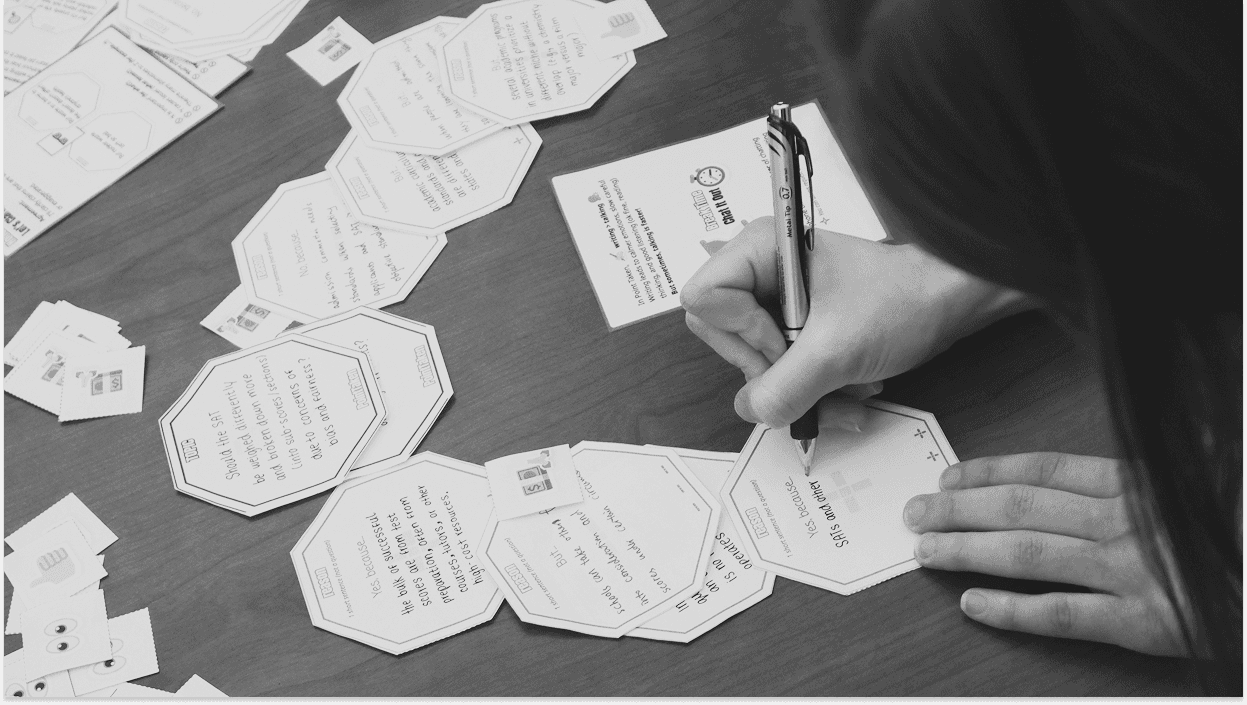
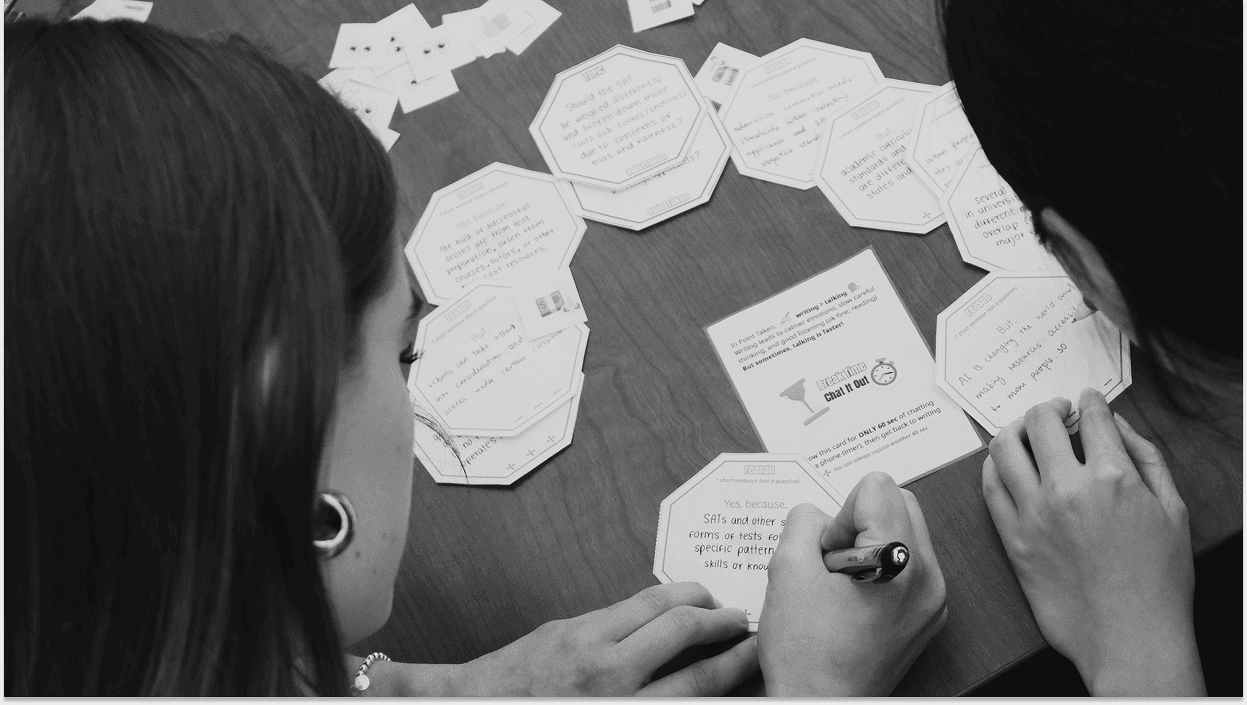
Moving from research study to product
I ran early user testing sessions in psychology courses and in the lab using a bare-bones prototype and a placeholder name. Students shared how they experienced gameplay, what they'd call it, and where they saw potential. After multiple rounds of feedback and team brainstorms, one name stuck: Point Taken.
Finding an identity that fits
Before landing on Point Taken, the game cycled through several names, each shifting how the team thought about the product's framing. I presented multiple directions myself, exploring how different names implied different framings: academic vs. playful, serious vs. accessible.
Early names leaned clinical, reflecting the game's research origins. But user testing revealed that players responded to language that felt inviting, not institutional. Point Taken struck the right balance: it nods to argumentation while implying mutual respect. It sounds like something you'd actually say mid-conversation.
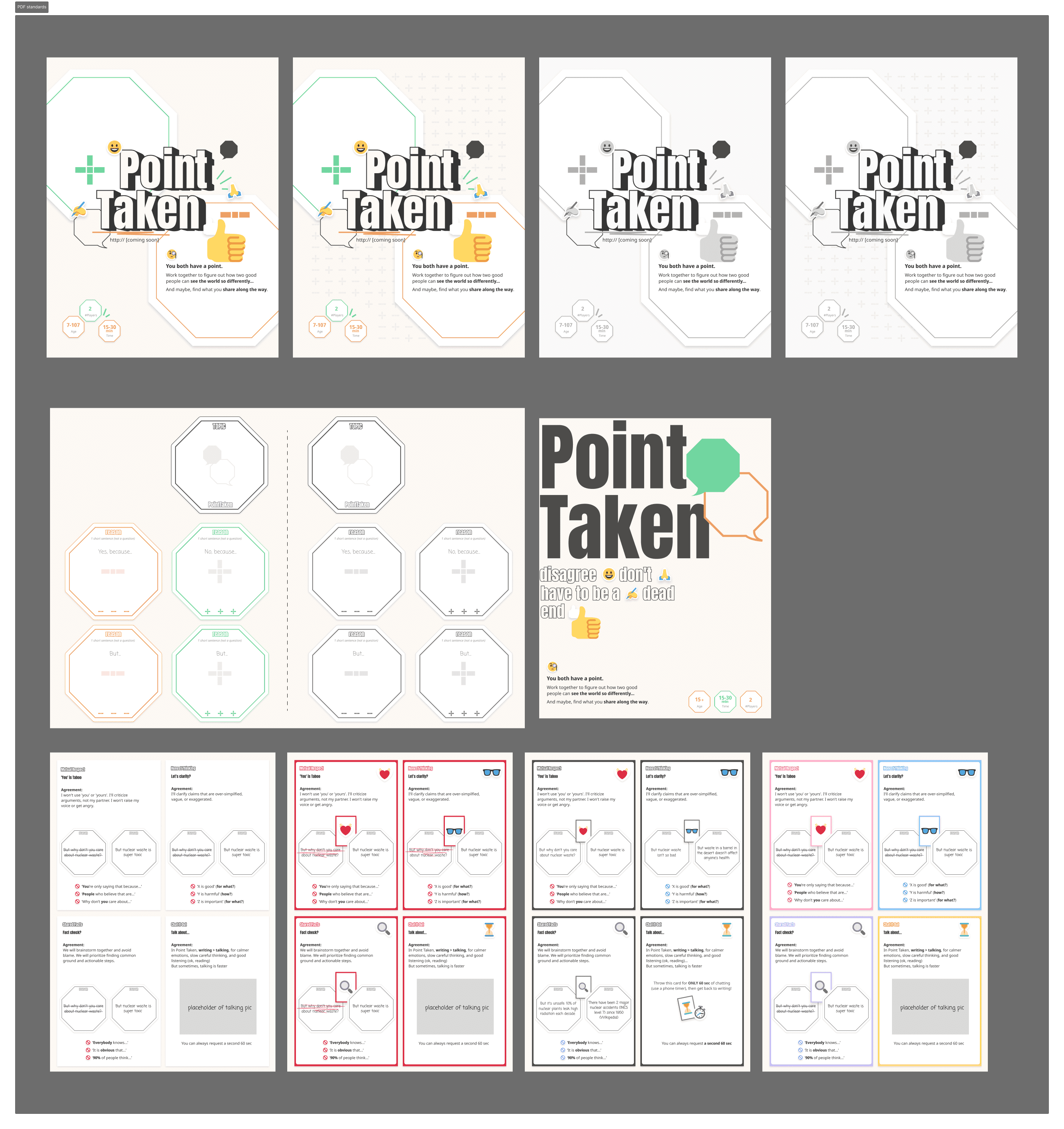
The visual system evolved in parallel. Early materials were dense, text-heavy instruction PDFs—functional for a research study, but not for a product people would want to pick up and play.I explored directions inspired by contemporary tabletop games: clean layouts, flat illustration, and color as a functional tool (not just decoration). The final style needed to do three things at once:
Feel approachable
This is a game, not a lecture
Signal substance
The topics are serious, even if the format isn't
Scale across contexts
From printed tiles to digital marketing to the website
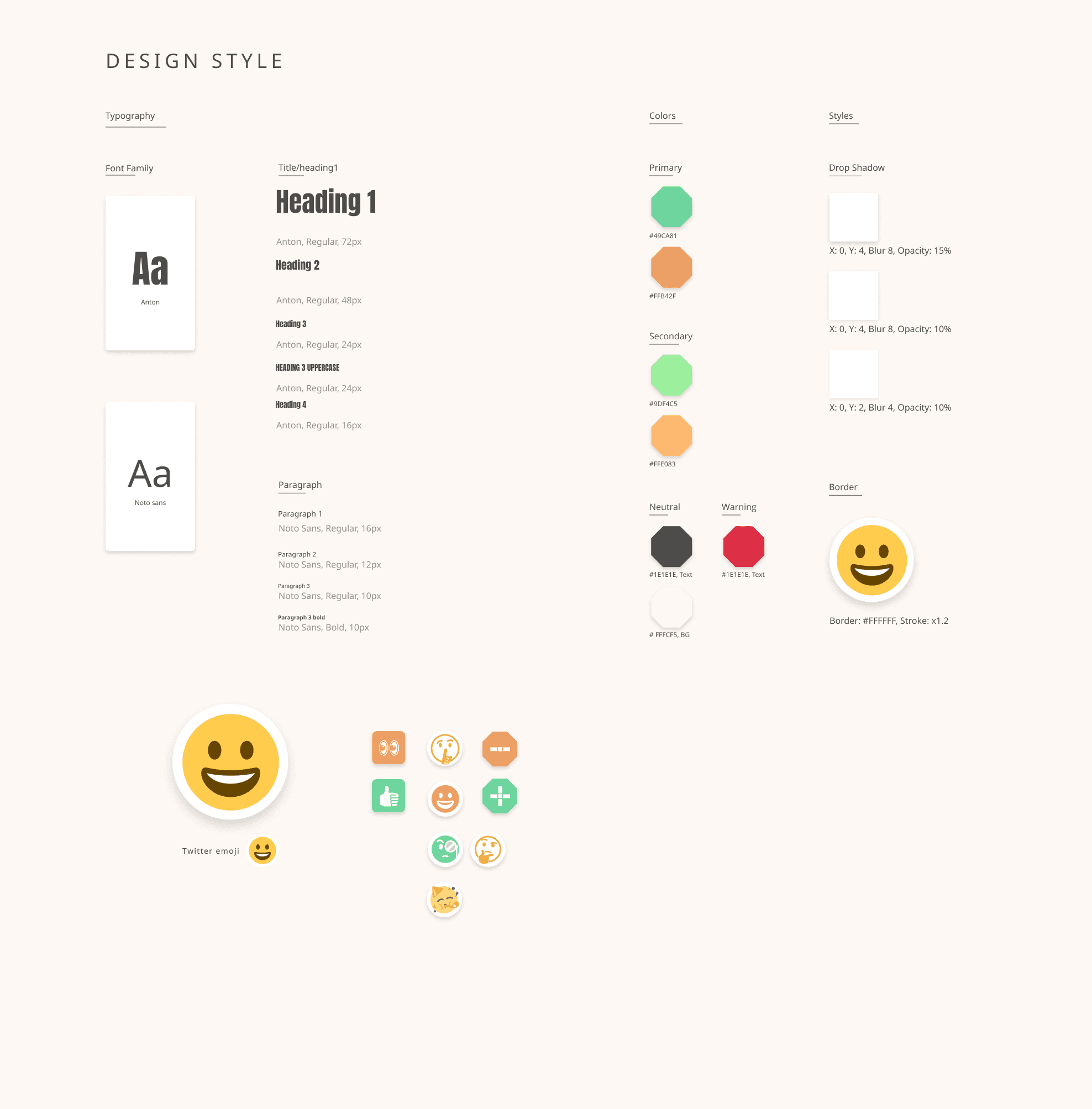
In collaboration with the senior designer, we created style guidelines and standards covering typography, color usage, illustration principles, and tone of voice. For a game about bridging political divides, partisan colors were counterproductive. I pushed for orange and green early on so the game could feel neutral before a single tile was played. These style guidelines became the foundation for everything that followed—including the commercial site I designed next.
What I shipped and shaped
I designed the brand experience.
Site design
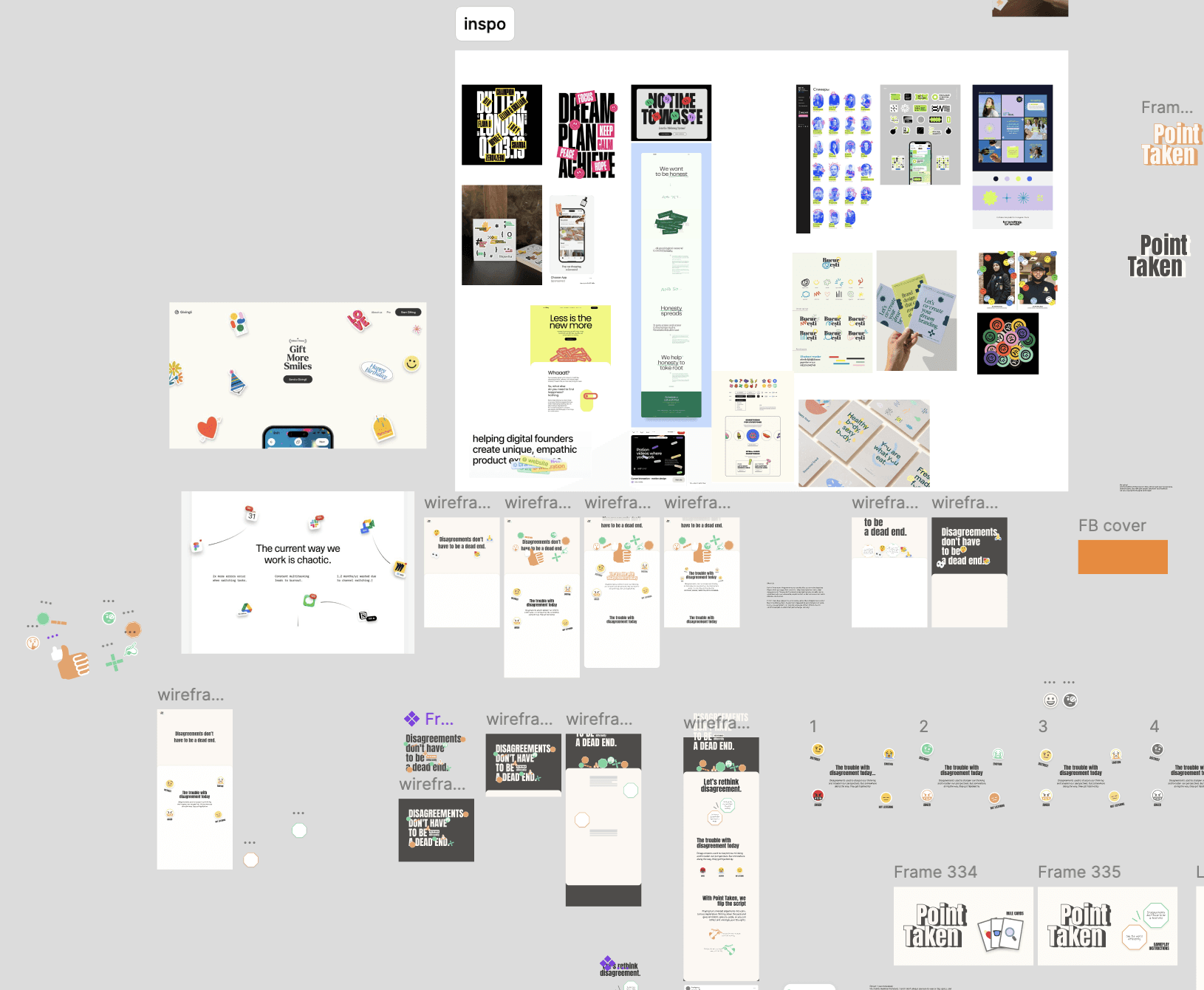
This was my most independent deliverable. I moodboarded for web-specific inspiration, wireframed and prototyped landing page layouts, then designed and built pointtaken.social. I also wrote every word of copy on the site, iterating with the founder to stay aligned with the project's mission.
Balancing serious with playful
The core design challenge was holding two truths at once: the subject matter is heavy (political polarization, democratic erosion) but the product is a game. The brand guidelines gave me a foundation, and I extended them to the web through micro-interactions that give the site energy without undermining the gravity of the mission.
I mapped the product architecture.
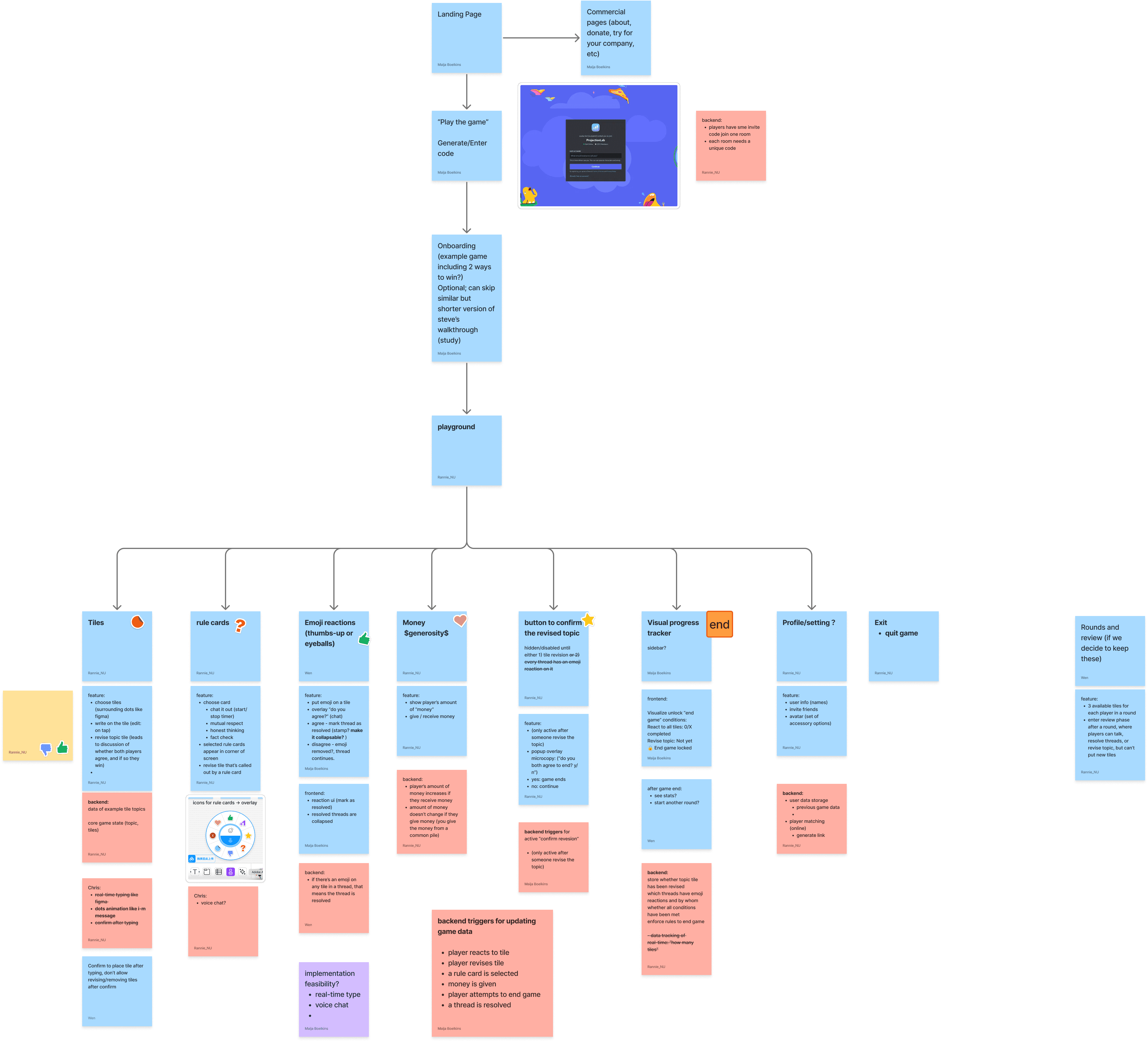
Happy Path and Information Architecture
Connecting touchpoints
I defined the end-to-end flow connecting the brand site to the digital game experience. Each feature was specced for both interaction design and backend requirements, bridging design and engineering from the start. This also forced me to think holistically about how the product communicates, converts, and connects with users at every touchpoint.
I iterated on the game system.
Working closely with the founder, senior designer, and developer, I helped evolve the printable game PDF across multiple versions—from dense instruction pages to a structured, playable digital version of the game.
Highlights
Two paths to winning
Both players win — or nobody does. Resolve every thread by finding exactly where you agree or disagree, or collaborate on a revised stance you can both stand behind.
Resolving threads
Each argument thread can be resolved in two ways: one player is genuinely convinced, or both players pinpoint exactly where their reasoning diverges. Rule reminder cards keep the conversation honest along the way.
What I took away
Reconciliation doesn't require full disagreement
Progress in disagreement isn't about consensus, it's about uncovering nuance. In the lab, th estrongest signal was that players understood their own position better after playing. Structure changes how people engage with their own thinking, not just how people engage with their opponents.
Trust the process when the destination keeps moving
Game mechanics were revised nearly every week. Our founder brought fresh feedback from outside perspectives that sometimes pushed in different directions. Settling on a happy medium between competing opinions, while keeping the core experience intact, taught me to trust the process even when the destination wasn't clear.
Collaboration is the product
Designing game mechanics directly shaped the engineering architecture and surfaced technical constraints that fed back into design decisions. This taught me how when working in a small team, nothing exists in isolation. In a small team, nothing exists in isolation! The best work came from staying aware how every choice ripples.
Point Taken is ongoing — I continue working with the team as it launches to new audiences!
Curious to see more?
This case study covers the highlights. I'm happy to walk through the experience deeper over a call. Feel free to reach out to me at maijaboelkins2027@u.northwestern.edu!