Reimagining city navigation in Copenhagen
Timeline
Team
1 Product Lead
1 Operations Head
1 Marketing Analyst
1 Creative Lead
Skills
User Research
Product Design
Pitching and Storytelling
The Brief
Bringing a startup from zero to MVP
During my fall semester studying abroad in Copenhagen through DIS Abroad, I took Innovation and Entrepreneurship in Europe, a course that challenged us to build a startup from scratch in 10 weeks. We had to identify real problems, iterate through multiple pitches, develop a niche product definition, and create a working MVP with a viable business model.
Motivation
Getting around a city is harder than it looks.

Every quarter, Northwestern students cobble together course decisions from Fizz and Reddit threads, group chats, impromptu conversations, and half-hearted CTEC reviews. The advice is out there—it's just scattered, inconsistent, and gatekept by who you happen to know. I surveyed 15 students to get a firmer grasp on how others were navigating this process.
Insights
Everyone relies on public transport, but few know how to navigate it confidently—and the problem is intensifying
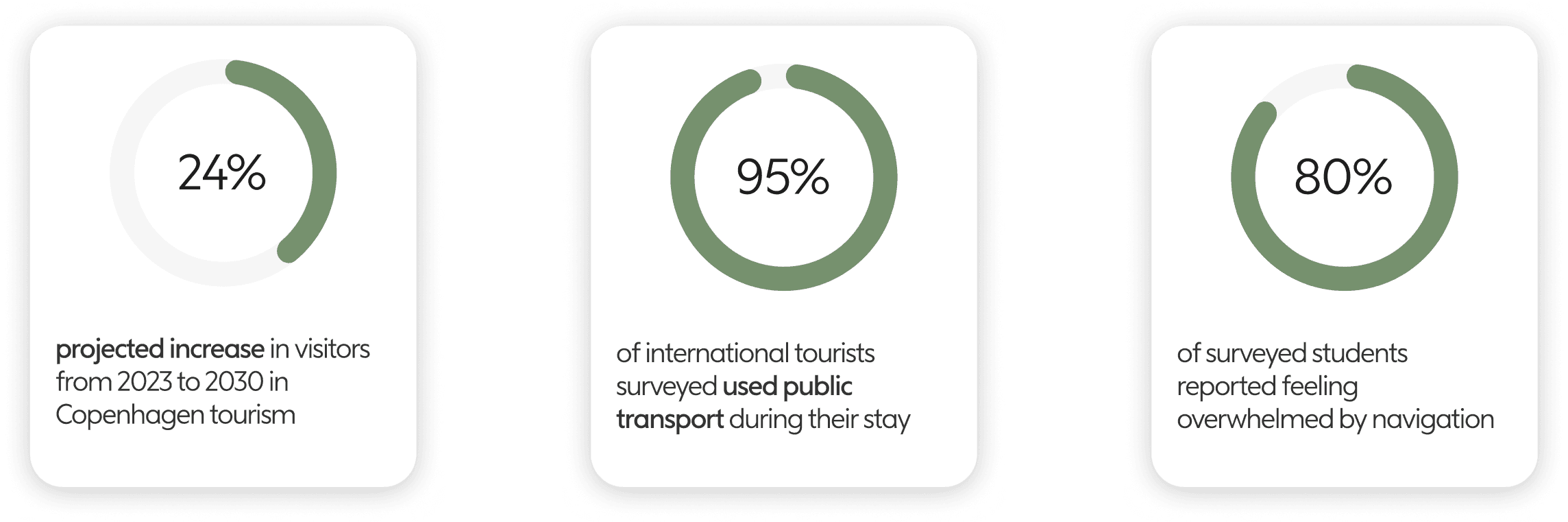
Even though 95% of visitors rely on public transport during their stay, very few actually feel confident navigating the system. Among international students, nearly one in four say they feel overwhelmed just trying to get around. So we started asking: What exactly is making navigation hard, and what would make it easier?
Primary and Secondary Research
Validation + Insights
Students and official tools have a fundamental mismatch in what they're looking for.
People want depth, not scores.
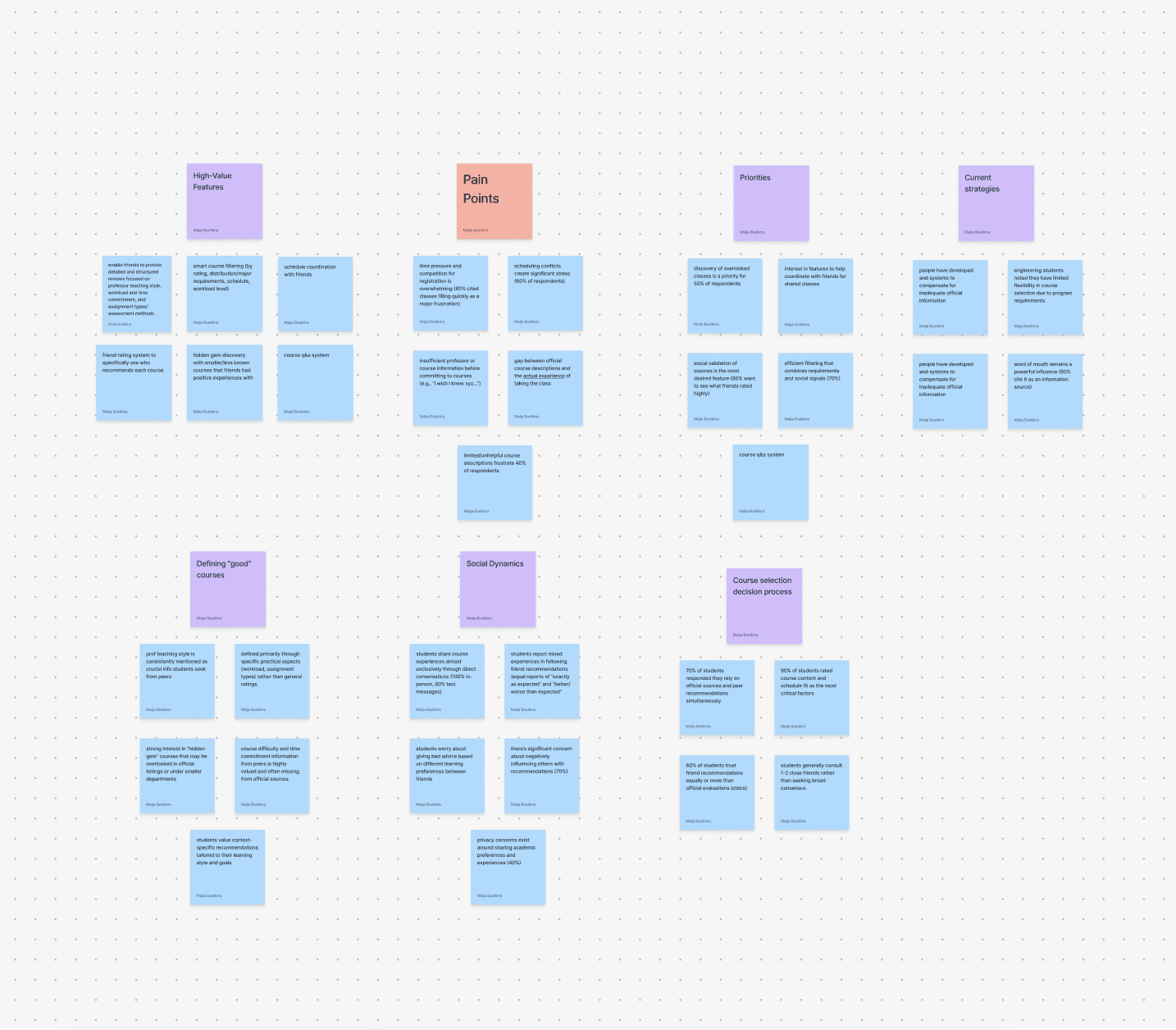
CTECs and the course catalog cover logistics like time slots, requirements, and capacity. But they miss what 93% of students actually prioritize: teaching style, workload reality, and what the class is really like.
Insight from friends matters more.
67% trust peer recommendations as much as or more than official evaluations. But that trust is limited by your social circle.
Sharing feels risky.
73% said they worry about influencing others negatively. They want to contribute, but they just don't want to be wrong publicly.
The Problem
The information students care most about is the hardest to find.
The best course advice lives in the heads of students who've already taken the class. But right know, that knowledge only flows to people who know the right people.
What's causing you the most issues abroad?
During my fall semester studying abroad in Copenhagen through DIS Abroad, I took Innovation and Entrepreneurship in Europe, a course that challenged us to build a startup from scratch in 10 weeks. We had to identify real problems, iterate through multiple pitches, develop a niche product definition, and create a working MVP with a viable business model.
Polarization and disagreement is everywhere.
While cross-partisan dialogue is often proposed as a fix for political division, research shows that without structure, these conversations can actually make things worse. People tend to treat arguments like a sport: one winner, one loser. Point Taken switches players from this "sports mode" to "collaboration mode."
Moving from research study to product
The game was originally developed within a pilot study at Northwestern, testing whether structured argument-mapping could reduce political hostility more effectively than unstructured conversation. I joined the team as the game transitioned from research tool to product — working simultaneously as a product design intern and as a research assistant in the psychology lab running the study. This dual role gave me a direct feedback loop: what I observed in controlled sessions shaped product decisions, and what I learned from open play testing pushed the research forward.
We ran early user testing sessions in psychology courses using a bare-bones prototype and a placeholder name. Students shared how they experienced gameplay, what they'd call it, and where they saw potential. After multiple rounds of feedback and team brainstorms, one name stuck: Point Taken.
Curious to see more?
This case study covers the highlights. I'm happy to walk through my process deeper over a call. Feel free to reach out to me at maijaboelkins2027@u.northwestern.edu! ⊹₊ ⋆